


Evikon fixed gas detectors and sensors for industrial refrigeration, machinery rooms and plant rooms: ammonia NH3, CO2, refrigerants, combustible gases, oxygen, ethylene, CO and toxic gases. 4-20 mA outputs, Modbus RS485 and alarm relays. Choose your gas below.
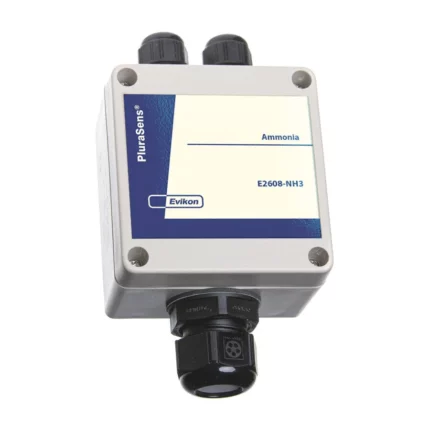
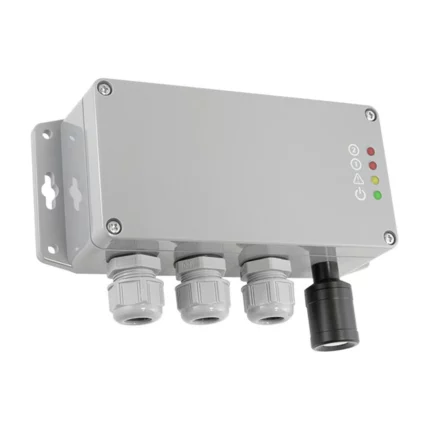
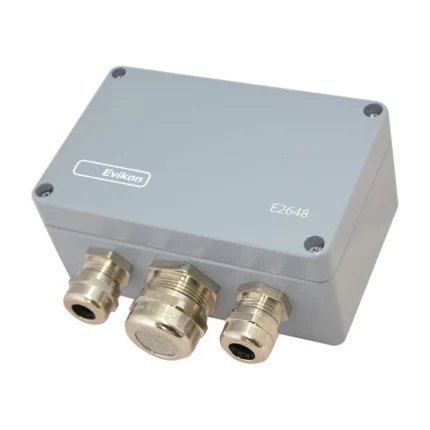
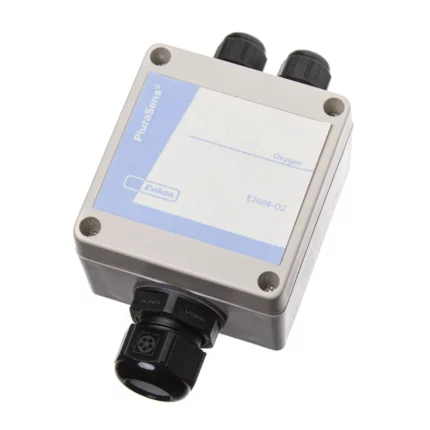
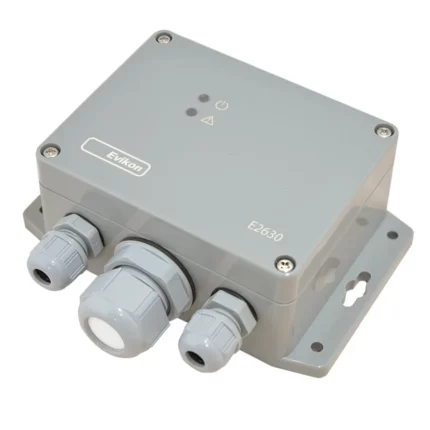
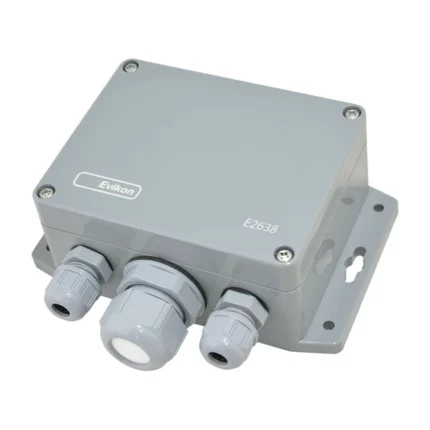
Combustible gas detector (methane, LPG, propane)
Fixed combustible and explosive gas detectors for boiler rooms, industrial kitchens, propane rooms and machinery rooms: methane, natural gas, propane, butane, LPG, hydrogen, measured from 0 to 100 % LEL. Stand-alone alarms or 4-20 mA transmitters. Choose the model below to see its specifications and options.
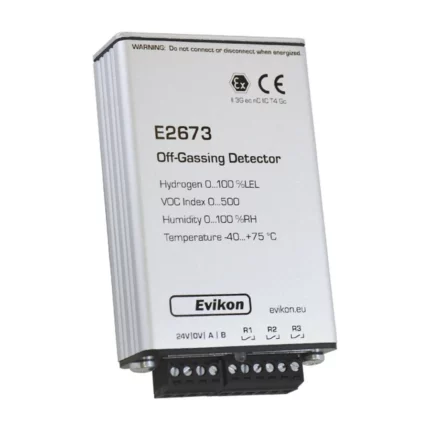
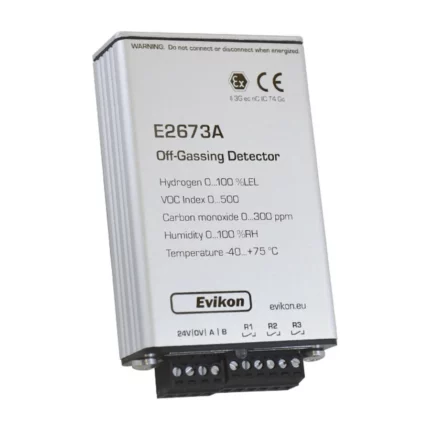
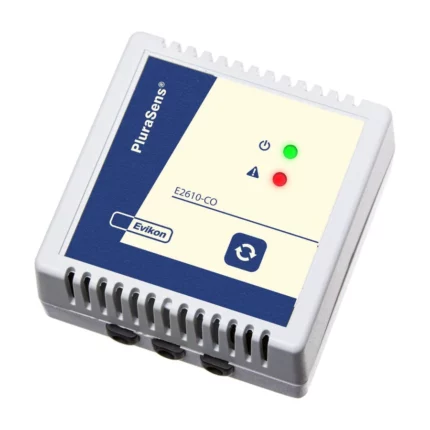
Carbon monoxide (CO) gas detector
Fixed carbon monoxide (CO) detectors for car parks, loading bays, warehouses with combustion-engine forklifts and boiler rooms: electrochemical cell from 0-100 to 0-1,000 ppm, lifetime over 10 years. Relay and buzzer alarms, or 4-20 mA transmitters for ventilation control. Choose the model below to see its specifications and options.
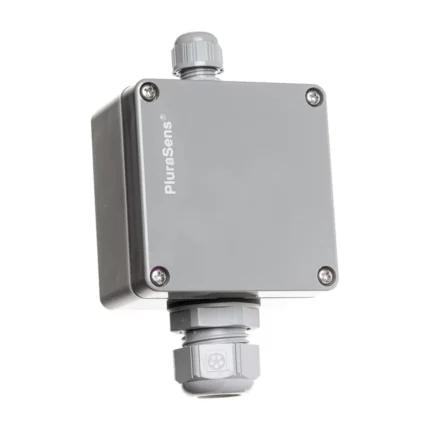
Which gas detector for your installation?
A fixed gas detector continuously monitors the air in a room. As soon as the concentration exceeds a set-point, it triggers an alarm, starts the ventilation or shuts off the gas supply. It also sends the reading to a PLC, a refrigeration controller or a monitoring system. The choice always starts with the gas to be monitored: each page below presents all the models and sensors available for that gas, with their options.
| Detector | Where to monitor | Models |
|---|---|---|
| Ammonia (NH3) gas detector (R717) | ammonia machinery rooms and cold rooms | 11 |
| Refrigerant gas detector (HFC, HFO, R32, R290) | racks, condensing units, heat pumps, cold rooms | 10 |
| CO2 gas detector (R744) | CO2 systems, ripening rooms, controlled atmosphere | 6 |
| Ethylene (C2H4) gas detector | ripening rooms, fruit and vegetable storage | 5 |
| Oxygen (O2) gas detector | controlled atmosphere, nitrogen or CO2 rooms | 6 |
| Combustible gas detector (methane, LPG, propane) | boiler rooms, industrial kitchens, propane rooms | 13 |
| Hydrogen (H2) gas detector | battery charging rooms, UPS rooms | 8 |
| Carbon monoxide (CO) gas detector | car parks, loading bays, boiler rooms | 8 |
| Nitrogen dioxide (NO2) gas detector | car parks and loading bays with diesel engines | 7 |
| Hydrogen sulphide (H2S) gas detector | wastewater plants, sewers, pits | 5 |
| Chlorine (Cl2) gas detector | water treatment and disinfection, pools | 5 |
| Ozone (O3) gas detector | water and air disinfection, cold rooms | 5 |
| Sulphur dioxide (SO2) gas detector | fruit preservation, winemaking | 5 |
| Ethylene oxide (ETO) gas detector | sterilisation of medical devices | 5 |
| Nitrous oxide (N2O) gas detector | operating theatres, medical gases | 5 |
| Nitric oxide (NO) gas detector | exhaust gases, combustion | 5 |
| Sulphur hexafluoride (SF6) gas detector | high-voltage substations | 2 |
| VOC and solvent vapour gas detector | paint shops, printing works, chemicals | 12 |
Sensor technologies
- Electrochemical: highly sensitive and selective, for toxic gases in ppm (NH3, CO, NO2, H2S, ethylene) and oxygen. The cell wears out: lifetime from 2 to over 10 years depending on the gas.
- Metal-oxide semiconductor (MOS): rugged and cost-effective, for HFC / HFO refrigerants, combustible gases and solvents. It responds to several gases: it is meant to detect a leak rather than to measure precisely.
- Infrared (NDIR) and photoacoustic: stable optical measurement with no chemical wear, for CO2, some refrigerants and flammable refrigerants. Lifetime of about 10 to 15 years.
- Catalytic bead (pellistor): for high concentrations of flammable gases, in % of the lower explosive limit (LEL). It works from −10 °C.
- Photo-ionisation (PID) and thermal conductivity: for volatile organic compounds and hydrogen.
Choosing the Evikon series
| Series | Housing | Outputs | Local alarm | Strengths |
|---|---|---|---|---|
| E2638 | ABS IP65 | 2 × 4-20 mA / 0-10 V, Modbus | optional relays, buzzer or display | 20 gases, the most complete |
| E2639 | ABS IP65 | 2 × 4-20 mA, Modbus, optional WiFi | 3 relays, 4 LEDs, buzzer | replaceable pre-calibrated sensor, EN 378-3 listed |
| E2608 | compact ABS IP65 | 2 × 4-20 mA / 0-10 V, Modbus | 2 relays | wall, duct or remote probe |
| E2618 | compact ABS IP65 | 2 × 4-20 mA / 0-10 V, Modbus | none | transmitter for a PLC |
| E2648 | aluminium IP66 | 2 × 4-20 mA / 0-10 V, Modbus | optional relays | demanding industrial sites |
| E2670 | Ex d aluminium | 2 × 4-20 mA / 0-10 V, Modbus | optional relays | ATEX zones 2 and 22 |
| E2674 | aluminium IP54, DIN rail | Modbus | relays or electronic outputs | R290, R32, R454B, calibration-free |
| E2630 / E2610 | IP65 / IP20 | no analog output | 2 relays, LED, buzzer | cost-effective stand-alone alarms |
| E2617 | ABS IP65 | 1 × 4-20 mA / 0-10 V | none | most cost-effective, for ventilation |
Where to install the detectors?
Install the detector close to the likely leak points (compressors, valves, joints, evaporators) and according to the gas density: high up for gases lighter than air (ammonia, hydrogen), close to the floor for heavier gases (CO2, HFC refrigerants, propane). Avoid direct draughts, water sprays and the vicinity of doors. The number of detectors depends on the room volume and the number of possible sources: we define it with you.
Maintenance and calibration
A detector is checked with test gas at regular intervals: usually every 6 months for electrochemical and catalytic cells, every 12 months for semiconductor sensors. Self-correcting infrared CO2 sensors and the E2674 need no field recalibration. The GSH sensor of the E2639 is swapped for an already calibrated sensor.
For humidity and temperature, see also our probes and sensors, including the Evikon E2218, E2228 and E2244 transmitters.
Afric Froid supplies and commissions these detectors on its refrigeration projects across North and West Africa: in Tunisia from its head office in the Ksar Saïd industrial zone, La Manouba; in Libya, where it has built, among other projects, banana ripening rooms in Tripoli; and in Algeria, Senegal, Côte d’Ivoire, Mali and Burkina Faso. Gas detection is built in from the machinery room design stage and connected to the plant monitoring system.
A gas detection project?
Tell us the gas, the room, its temperature and the number of points: we define the models, their location and the set-points, then send you a quote.


