Containerised Solar Cold Rooms – Ethiopia
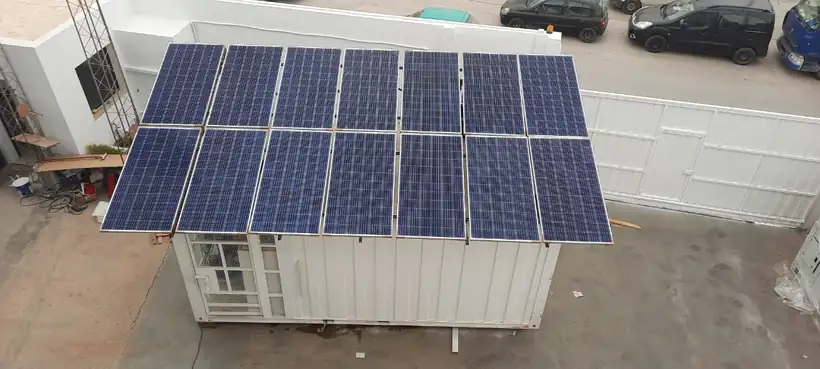
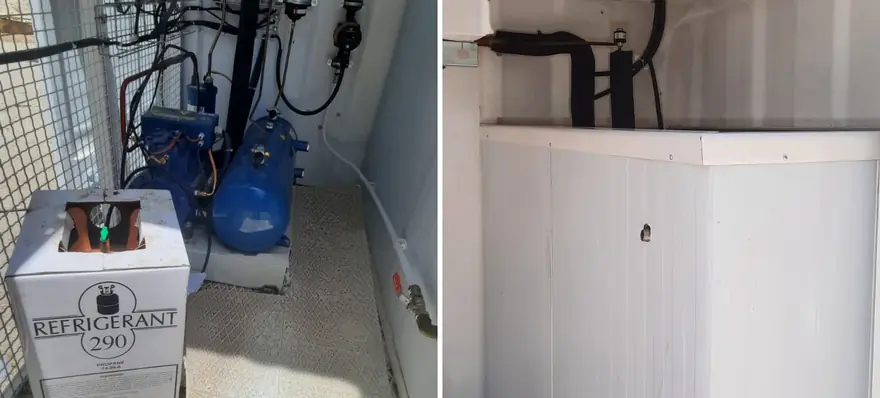
Mobile solar cold room in a container, using R290
Six containerised solar cold rooms supplied by Afric Froid to fruit and vegetable cooperatives in Ethiopia, with GIZ’s Green People’s Energy programme
Design and supply, in cooperation with GIZ, of six mobile cold rooms that run independently of the power grid, each built into a 20-foot container. Cooling comes from a propane (R290) chilled-water unit powered by photovoltaic panels, with two forms of energy storage: lithium batteries and an ice reserve.
Address
Farmer cooperatives, rural Ethiopia
Scope of work
Design, engineering and supply of the six containers.
Sector
Fruit and vegetables – off-grid solar cooling
Temperature
+4 to +15 °C, adjustable
The solution delivered
Context and client needs In Ethiopia, post-harvest losses average 25%, and more than 32% for fruit and vegetables. Horticultural areas have little or no access to the power grid. GIZ’s Green People’s Energy programme therefore launched a solar cooling pilot with cooperatives of at least 200 farmers, calling for a stand-alone, transportable cold room using a refrigerant with a very low climate impact.
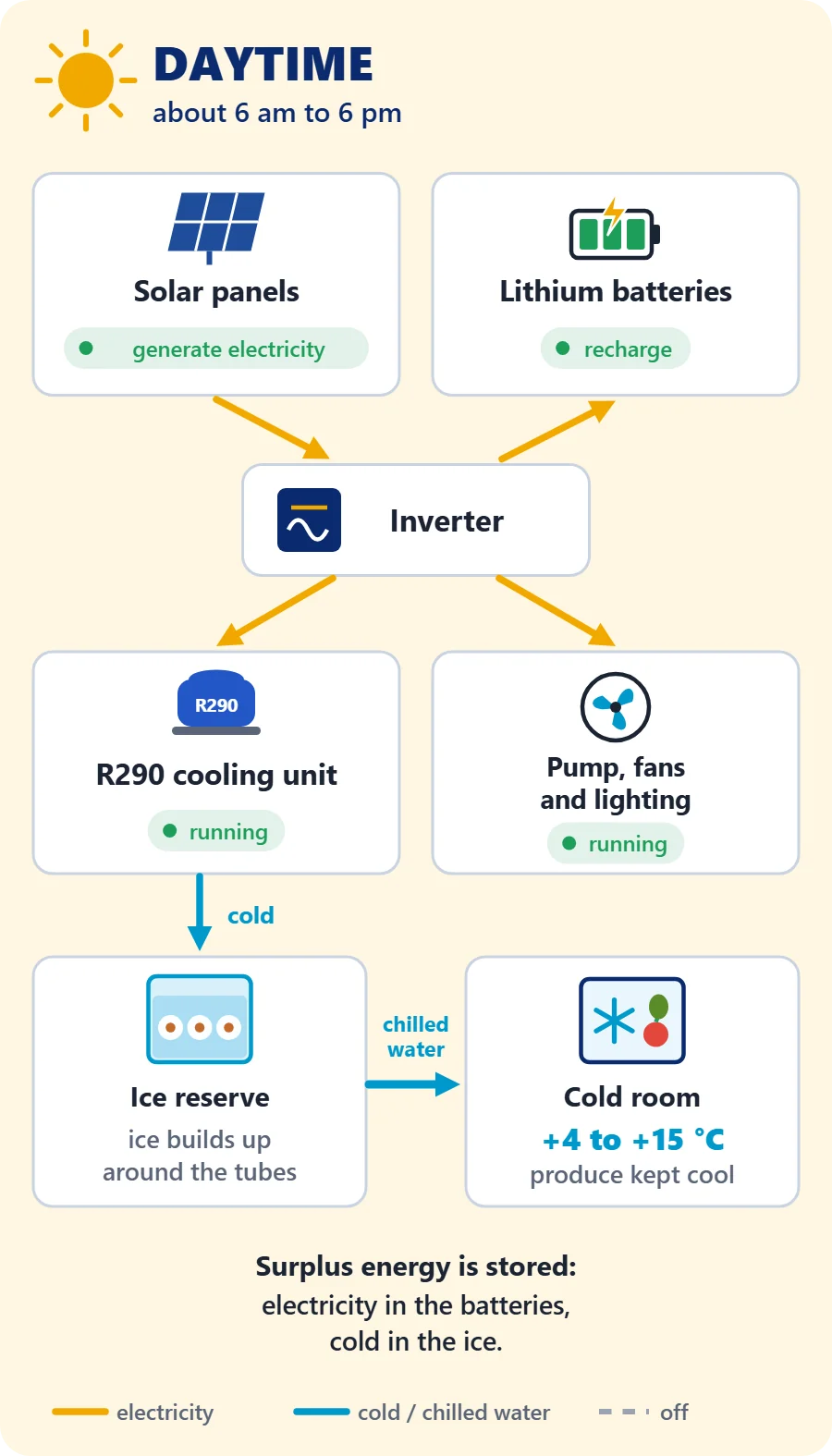
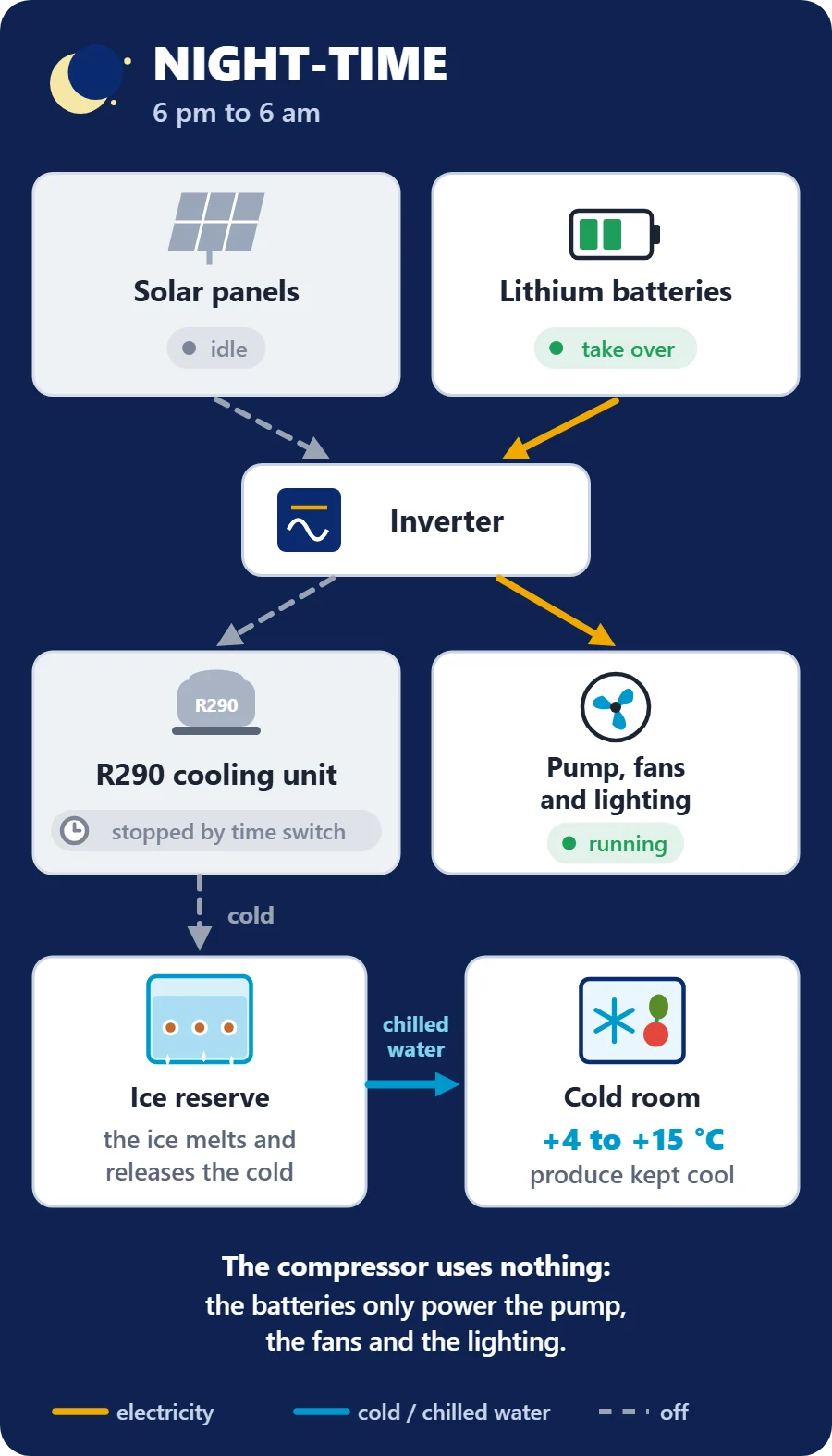
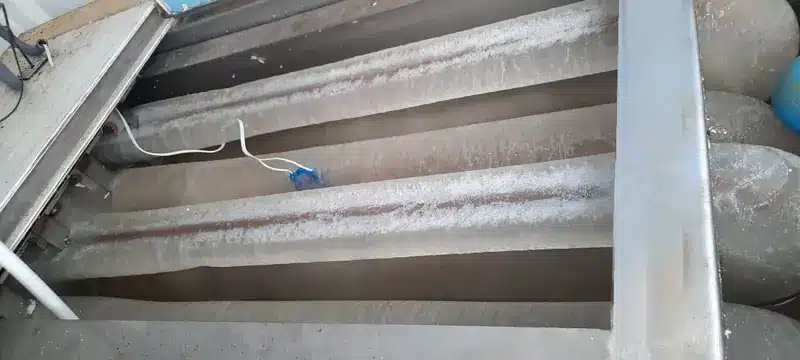
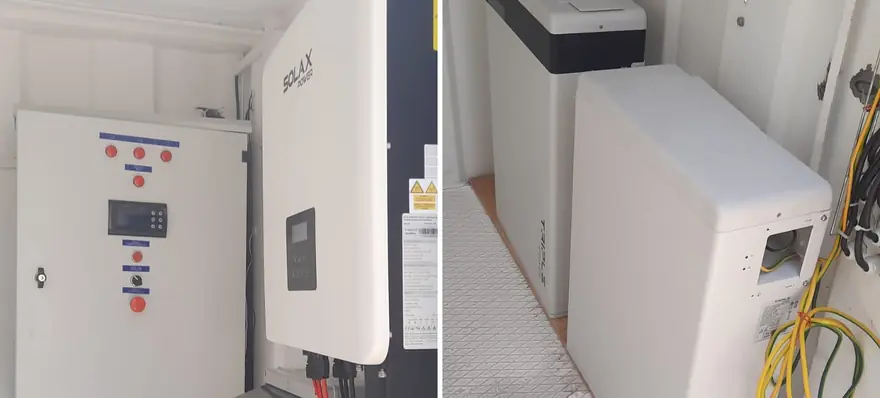
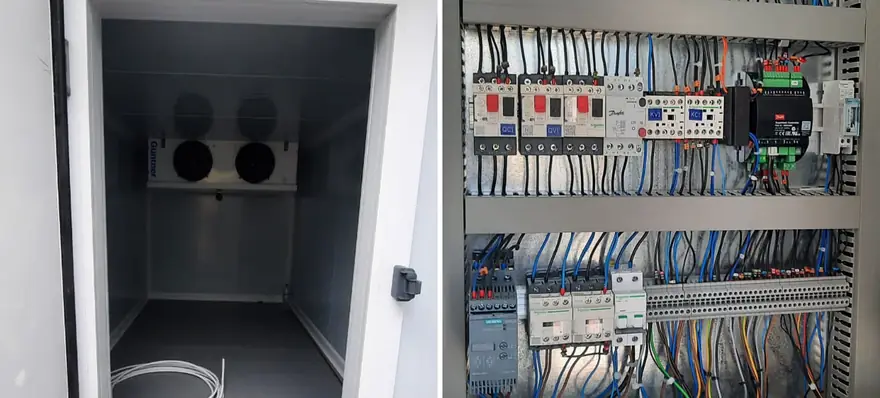
What we did AFRIC FROID built the whole system into a 20-foot container: photovoltaic panels on the roof, an R290 condensing unit that cools a water tank, a pump and heat exchangers in the cold room, an inverter and lithium batteries. During the day, the compressor builds ice around the copper tubes in the tank; a time switch stops it from starting at night. The ice then releases the cold, and the batteries only power the pump, the fans and the lighting. Each container has about 4.55 kW of photovoltaic panels, and the temperature can be set between 4 and 15 °C depending on the produce. AFRIC FROID supplied all six containers in the project, in use since March 2023 and benefiting more than 1,400 farmers. Read our article on solar cold rooms and GIZ’s case study.
Project highlights
Keeping tomatoes, avocados and other fresh produce cool right after harvest, in areas without a reliable power grid, when solar power is only available from about 6 am to 6 pm.
A solar-powered R290 chilled-water unit with two forms of storage: lithium batteries and ice. The compressor only runs during the day, when solar power is available.
Lower post-harvest losses, little or no diesel, about 40 t of CO2 avoided per year for the six containers, a refrigerant with a GWP of 3 versus 3,900 for R404A, and about 22% less electricity than with R404A.
How it works, day and night