


News & Projects
Solar cold rooms: keeping produce cold without a reliable grid
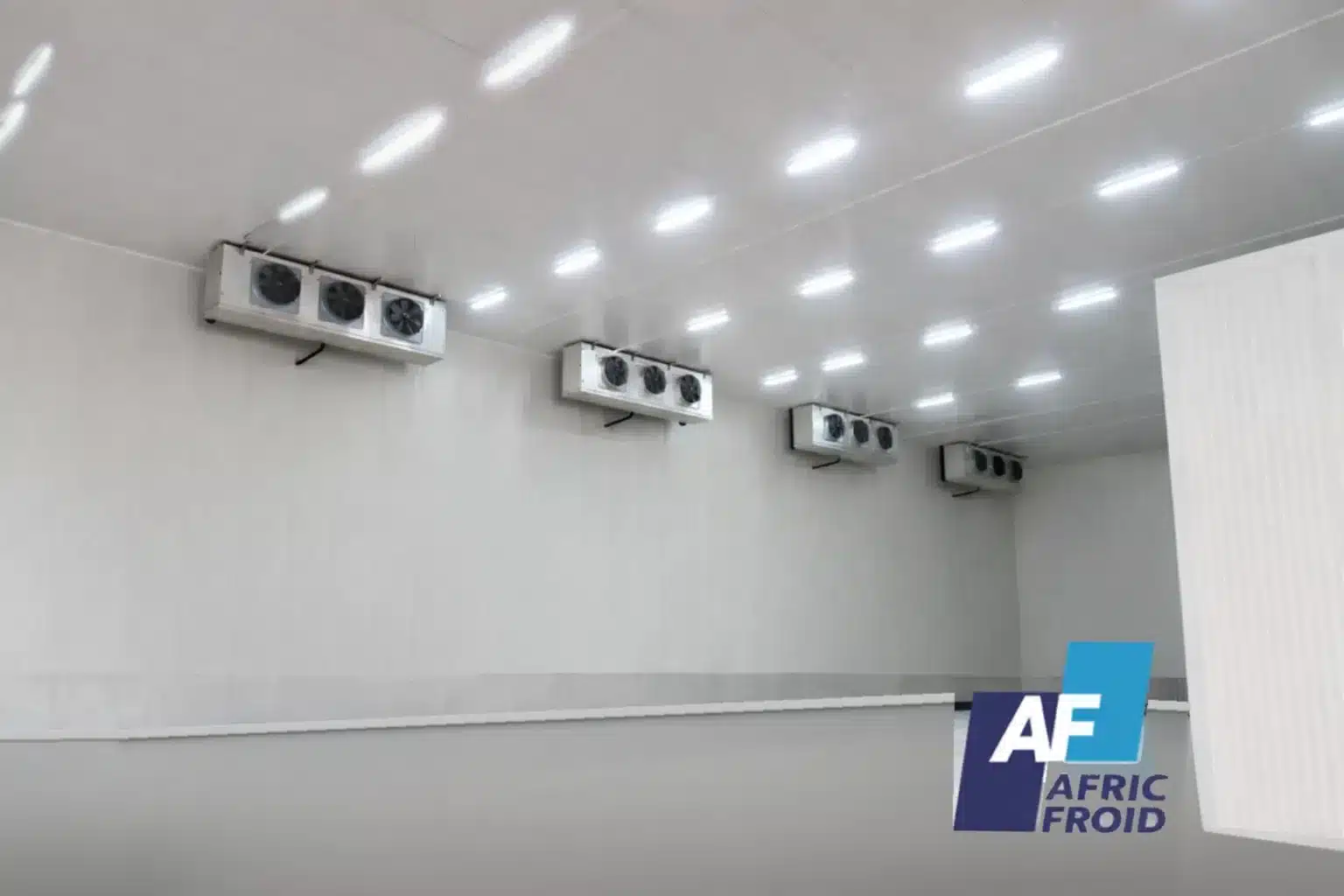
In many rural areas of Africa, the power grid is either absent or cut for several hours a day, and diesel for a generator is expensive. As a result, fruit, vegetables, fish or milk are lost for lack of cooling. A solar cold room solves this by producing cold from sunlight, which is abundant across almost the whole continent. Afric Froid has also designed a mobile, containerised version with GIZ (see our project).
How does a solar cold room work?
A solar cold room looks like a conventional cold room: insulated panels, a tight door, an evaporator inside and a refrigeration unit outside. The difference is the power supply:
- Photovoltaic panels generate electricity during the day.
- A variable-speed refrigeration unit adjusts its output to the energy available: it runs hard at midday and slows down as the sun goes down.
- Energy storage covers the night and cloudy days.
Batteries or stored cold?
There are two ways to get through the night:
- Batteries store the electricity produced during the day. This is simple, but batteries are a large part of the budget and must be replaced after a few years.
- Stored cold: during the day, the unit produces more cold than needed and stores it in ice or in eutectic plates inside the room. At night, this store releases the cold without using electricity. This solution lasts longer and needs less maintenance.
The choice depends on the target temperature, the quantity of products coming in each day and the budget. Many installations combine both, with a grid or generator connection as backup.
Which products?
Solar cold rooms are best suited to chilled cold rooms, between 0 and +12 °C:
- fruit and vegetables, right after harvest, on farms and in cooperatives;
- fresh fish at landing sites, alongside an ice machine;
- milk and dairy products at collection centres;
- drinks and fresh products in shops far from the grid.
A frozen cold room, at −18 °C or below, needs much more energy. It remains possible, but a hybrid solution (solar plus grid or generator) is then usually more economical.
Sizing a solar cold room properly
Sizing starts with a heat load calculation, as for any cold room, followed by an energy balance:
- Volume and products: quantity stored, quantity coming in each day and incoming temperature.
- Climate: maximum outdoor temperature and sunshine on site, month by month.
- Insulation: every watt saved reduces the number of panels and the size of the storage. Thicker insulated panels, a well-sealed door and a strip curtain at the entrance are often the most cost-effective investments.
- Use: number of door openings, loading times, need to run at night.
Loading products in the morning rather than the evening, when solar energy is available, also makes a big difference.
Maintenance
Maintenance is simple, but it must not be forgotten:
- clean the solar panels regularly, especially during the harmattan or sandstorms;
- clean the condenser of the refrigeration unit;
- check the door seals and the condition of the insulated panels;
- monitor the batteries, if the installation has any.
Cost and payback
A solar cold room costs more to buy than a grid-connected one, because of the photovoltaic panels and the storage. On the other hand, it uses little or no diesel or grid electricity. Payback therefore depends on local energy prices, the number of hours of power cuts and the value of the products saved. Our guide on cold room prices explains the other factors that drive the budget.
Our project with GIZ: a containerised solar cold room
In cooperation with GIZ, the German agency for international cooperation, Afric Froid designed a mobile solar cold room for a project in Ethiopia, presented at World Refrigeration Day 2022. The goal: keep products cold without relying on the power grid. See the project page.
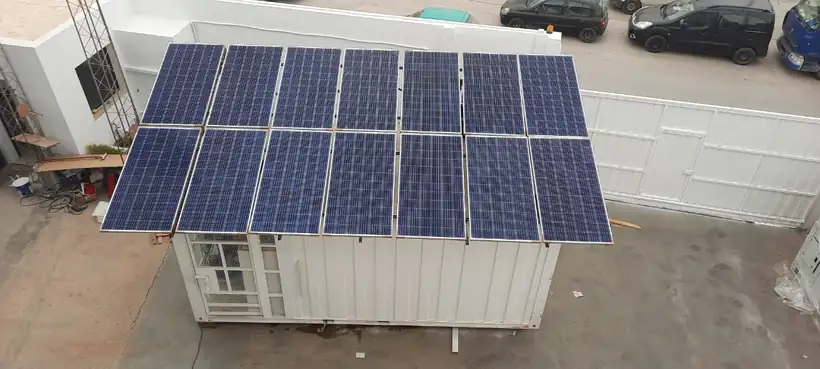
- A mobile cold room: the cold room and all the equipment fit in a 20-foot container that can be trucked to the site. The photovoltaic panels sit on the roof.
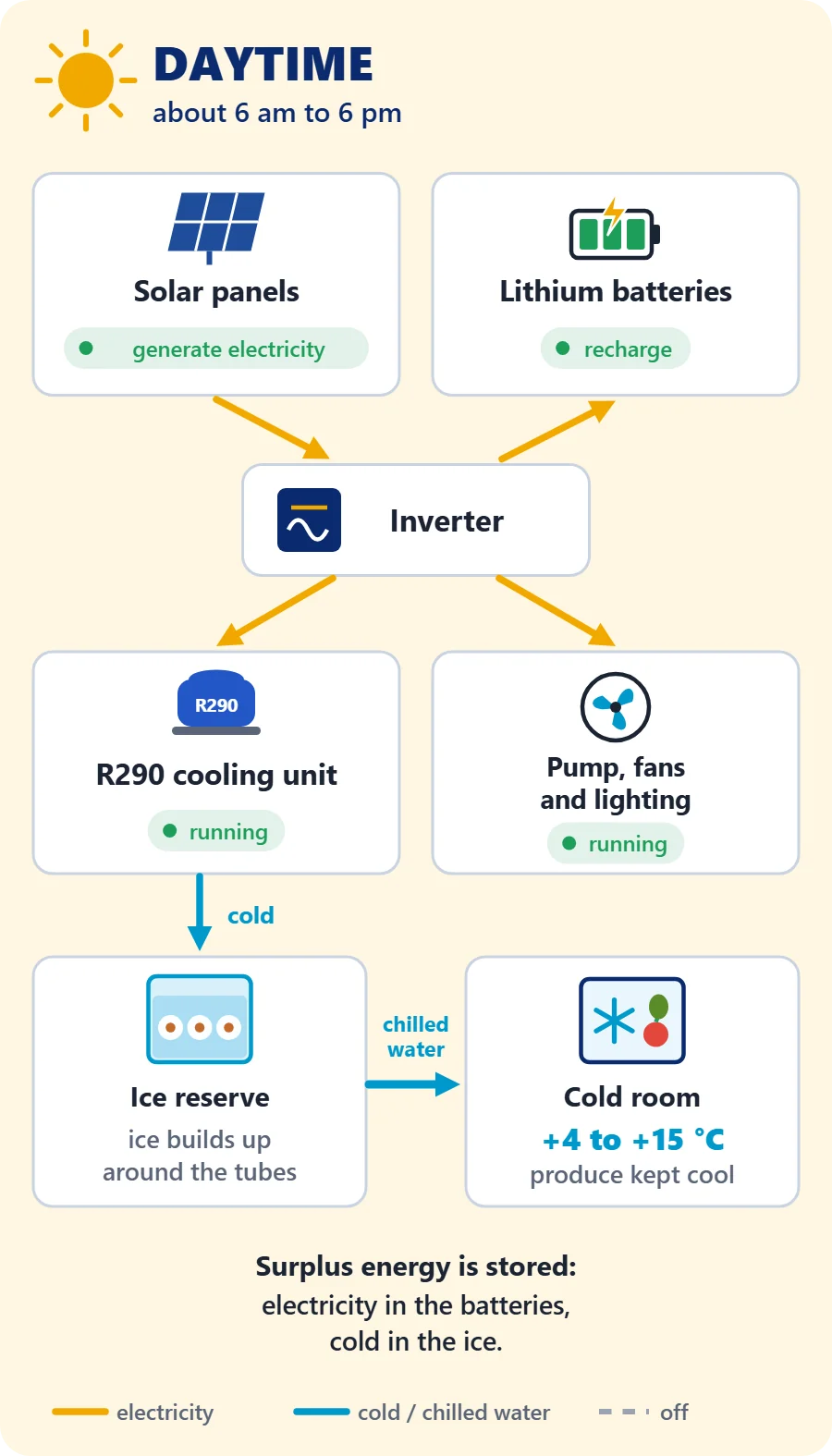
- An R290 chilled-water system: a propane condensing unit cools a water tank, then a pump sends the chilled water to the heat exchangers in the cold room. The refrigerant stays in the technical section, outside the cold room.
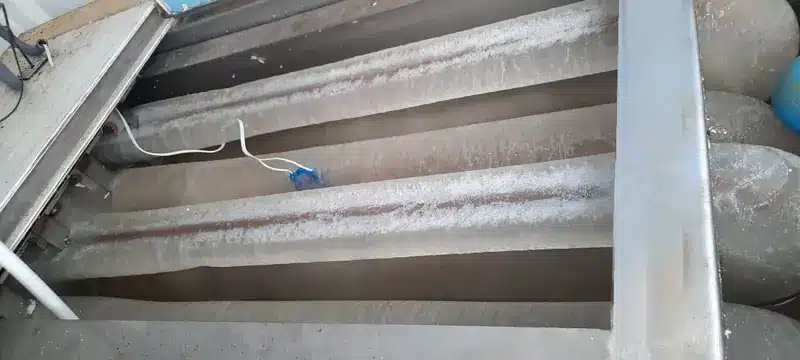
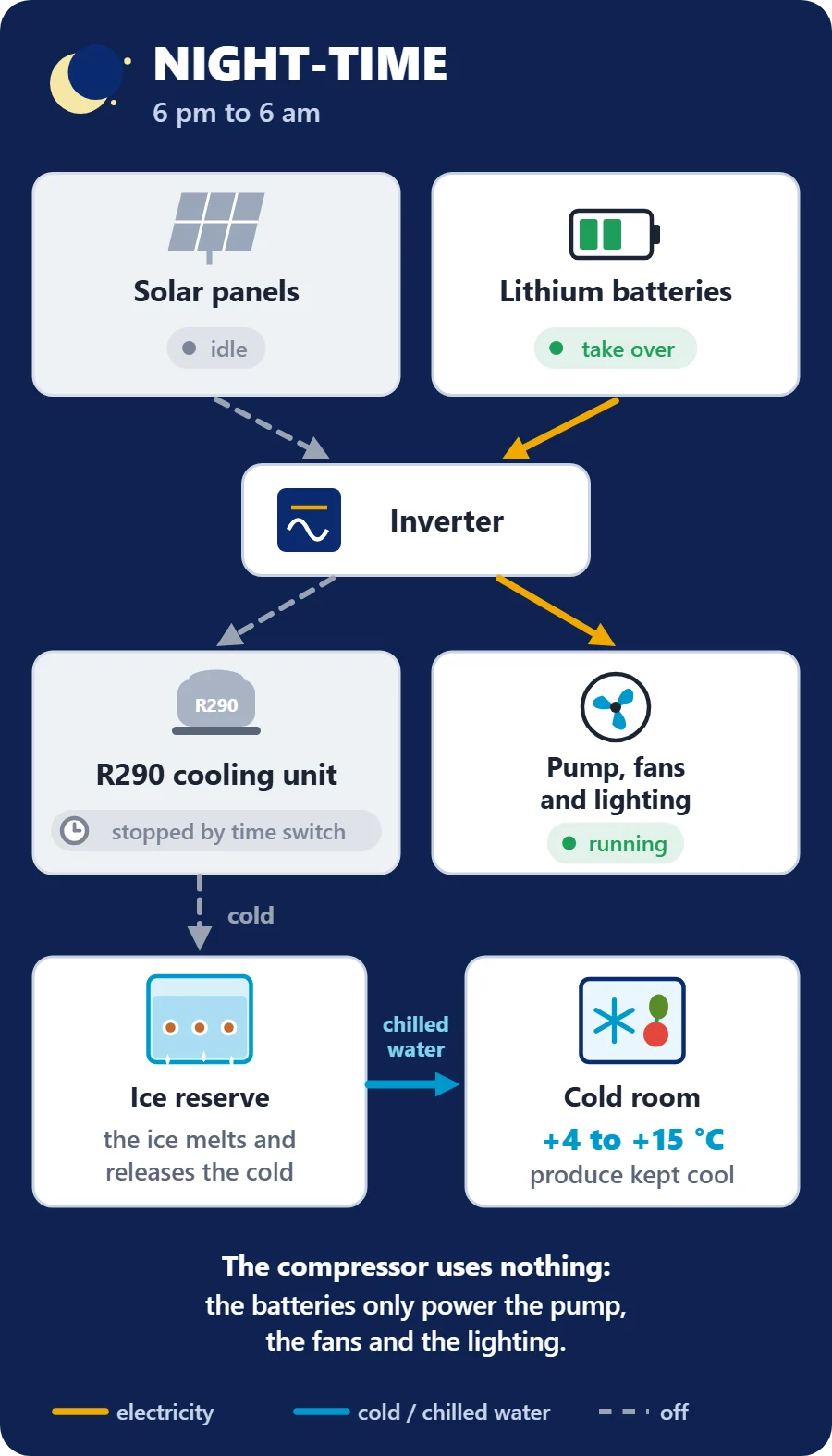
- Two forms of energy storage: lithium batteries with their inverter, and a “frozen-water battery”: during the day, ice builds up around copper tubes immersed in the tank.
Under GIZ’s Green People’s Energy programme, Afric Froid supplied six of these containers, in use since March 2023 at fruit and vegetable cooperatives in rural Ethiopia. They store tomatoes and avocados, among other produce, and benefit more than 1,400 farmers. Each container has about 4.55 kW of photovoltaic panels, the temperature can be set between 4 and 15 °C, and together they avoid about 40 t of CO2 per year (source: GIZ case study).
The compressor only runs during the day
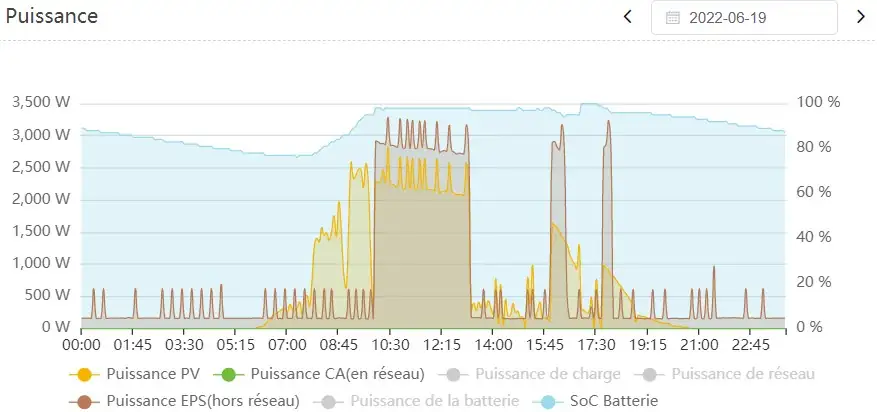
Solar power is only available from about 6 am to 6 pm, and not steadily. A time switch only lets the compressor start during the day, when it makes ice with the energy from the panels. At night, the ice melts and releases the cold. The batteries then only power the pump, the fans and the lighting, so they are not drained. A generator can take over as a backup.
Why R290 (propane)?
- Environmentally friendly: the global warming potential (GWP) of R290 is 3, compared with 3,900 for R404A, which is still widely used in commercial refrigeration.
- Economical: with the same compressor model, at −10 °C evaporating and 48 °C condensing, the coefficient of performance (COP) reaches 2.24 with R290 versus 1.74 with R404A. That is about 22% less electricity for the same amount of cooling, so fewer panels and batteries. Compared with R134a, R290 also gives a higher COP with a smaller compressor.
- No capacity limit: R290 compressors are available in high capacities, such as the 95 HP Bock HG88.
- Safe in this configuration: propane is flammable. With a chilled-water system, it stays confined in the unit, outside, and only water circulates in the cold room. In our case, the European standard EN 378 then sets no limit on the refrigerant charge.
The same principle works for chilled-water units for central air conditioning or chilled rooms, and for condensing CO2 or ammonia plants for freezer rooms, using R290 or R600 instead of R134a.
How Afric Froid can help
Afric Froid designs and installs cold rooms in Tunisia, Senegal and Côte d’Ivoire. On request, the power supply can be solar or hybrid: we carry out the heat and energy balance, choose between batteries and stored cold, then handle installation, commissioning and after-sales service.
Do you have a cold room project off the grid or in an area with frequent power cuts? Tell us about it and we will suggest the most suitable solution.


