


News & Projects
Comparative study: local ice production vs imported ice
Comparing local and imported ice to make the right decision
With growing demand for ice in fishing, catering, food processing and retail, businesses face a strategic choice: invest in local ice production or rely on imported ice.
This decision directly affects costs, quality, logistics and continuity of service. A comparison helps clarify what is at stake and identify the solution best suited to the market.
Local ice production: control, responsiveness and quality
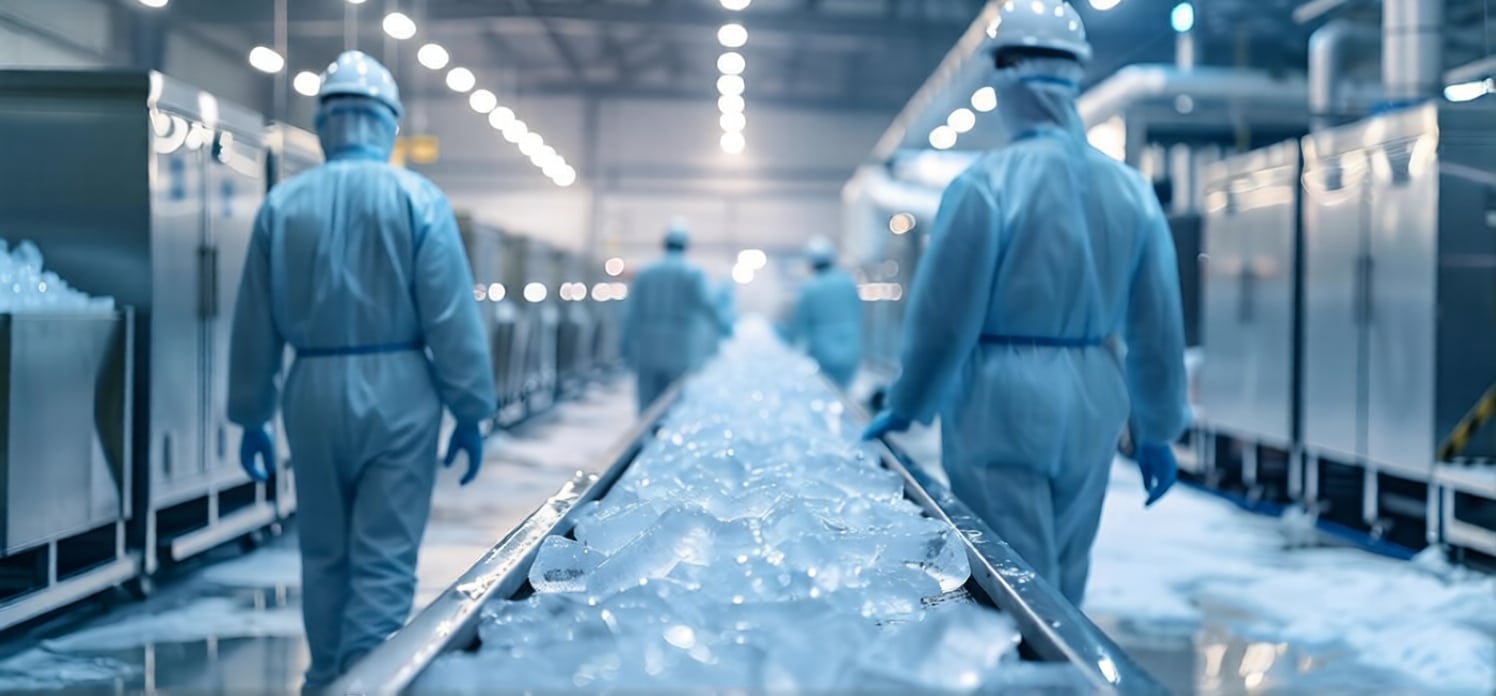
Local ice production means installing ice machines or production units on site or close to where the ice is used.
Above all, this gives full control of the process, from water quality to production and storage conditions.
Producing locally provides ice that is fresh and immediately available, with no dependence on transport times or outside suppliers. In a hot climate, this responsiveness is essential for preserving the cold chain, particularly in fishing and food preservation.
Imported ice: an occasional but restrictive solution
Imported ice means buying from external suppliers, sometimes located far away.
This option may seem attractive in the short term, especially for occasional needs or where there is no local infrastructure, as it avoids an initial investment in equipment.
Dependence on suppliers also exposes businesses to price changes, supply shortages and delays, which can weaken operations, especially at times of high demand.
Economic and logistics comparison
Comparing the two models, local and imported ice differ significantly in cost, organisation and reliability. This comparison helps measure the long-term operational impact.
Predictable, controlled costs
Local ice production gives much more stable visibility on operating costs. Once the initial investment has been paid back, costs are mainly energy, water and machine maintenance, which are controllable and predictable over time. This stability helps businesses plan budgets and protect their margins.
Independence and continuity of service
Producing locally means having ice on demand, without depending on an outside supplier, a delivery schedule or distant logistics. This independence makes businesses more resilient to the unexpected.
Even in the event of transport delays, strikes, bad weather or sudden peaks in demand, local production ensures essential continuity of service, especially for sensitive sectors such as fishing, catering and food processing.
Flexible production volumes
Local ice production allows volumes to be matched precisely to actual activity. Businesses can increase or reduce output according to fishing seasons, tourist numbers or periods of high commercial demand.
Imports, by contrast, often require fixed volumes or bulk orders, sometimes larger than actual needs. This rigidity leads to melting losses, unnecessary storage or extra logistics costs, reducing overall profitability.


Logistics costs and associated losses
Imported ice involves a complex supply chain: refrigerated transport, handling, temporary storage and strict temperature control. Each step adds cost and risk of loss.
Partial melting, temperature breaks and delays can quickly add up and affect product quality. A properly sized local production unit greatly reduces these losses, simplifies logistics and improves operational efficiency.
Impact on business competitiveness
As local industries become more structured and professional, ice production becomes a real strategic lever. It helps businesses control their cold chain, ensure consistent quality and make their offer more reliable.
This operational control improves competitiveness in local and regional markets and opens up new opportunities, particularly in exports and modern retail.
Impact on the cold chain and local development
Beyond the financial aspect, local ice production plays a key role in securing the cold chain.
It improves product preservation, reduces food waste and supports key sectors such as small-scale fishing, agriculture and food processing.
Investing in local production also contributes to economic development, creates technical jobs and builds local skills.
Ice production, a long-term strategic choice
The comparison shows that while imported ice can meet occasional needs, local ice production is the most reliable, economical and sustainable solution in the long term.
With the right technical support, ice production units make businesses more independent, efficient and competitive, while meeting local hygiene and climate requirements.

